My Trans Mexico Relocation
 ‘My Trans Mexico Relocation’ is a member-submitted personal experience navigating the process of relocating from the U.S. to Mexico. Jackie, writing under an assumed name, wishes to remain anonymous due to the shifting sociopolitical climate in the United States.
Jackie originally consulted with us about rising risks of living authentically in the United States, along with advice on what countries might be worth considering. Based on her own desires, she has chosen Mexico and graciously has agreed to provide this first-hand account of her experiences. (Updated March 11, 2026)
I will update this article as my relocation journey progresses, so please check back soon!
‘My Trans Mexico Relocation’ by Jackie
 There are moments in life when you realize the ground beneath your feet has shifted. It begins slowly at first. Then reality comes crashing all at once.
For many transgender people in the United States, it is feeling exactly like that. The place we called home was imperfect but steadily moving toward equality. Now feels uncertain in ways that are hard to ignore. Policies change. Laws shift. Rhetoric escalates. You sense danger. Suddenly something that once felt stable begins to look fragile. This realization is what set me on the path toward exploring relocation to Mexico.
This article is not a definitive guide. It is simply my personal journey navigating the stages of that process. In this article, I will share the research I conducted and the considerations that are shaping my decisions.
If you’re transgender and thinking about leaving the United States, you are far from alone.
Some Trans People Are Looking Beyond the U.S.
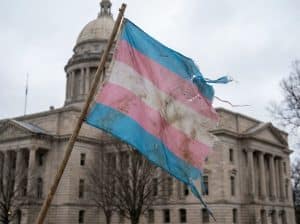 For many of us, the current sociopolitical climate in the United States is how conversation about relocation began.
Across the U.S., legislation targeting transgender people has accelerated. Laws affecting gender-affirming healthcare, participation in public life, legal recognition, and even basic identification documents have become flashpoints. Some states have restricted the ability to update gender markers on driver’s licenses or birth certificates. Others have proposed limits on gender-affirming medical care. It seems the targeted legislation and enforcement against trans people is just getting started.
For example, Kansas has enacted a law invalidating the driver’s license of all transgender people who have previously (legally) listed gender other than that assigned at birth. Under the new law, the license must be immediately surrendered and a new license issued with the gender at birth. Violation of this law, even to drive to DMV to replace the license, is a criminal offense punishable by financial penalty and imprisonment. Of course, the person being charged would be housed in a jail according to their gender at birth, regardless of their presentation.
Even federal documentation — such as passports and Social Security records — has become part of an evolving and sometimes uncertain policy landscape. Similar to the Kansas law, the U.S. has implemented a rule by executive action by President Trump, the requirement that gender at birth be listed on passports of transgender people, regardless of transition status.
Social Stigma and Discrimination
Beyond legislation, there is also the daily reality of social stigma and overt bigotry. Transgender people frequently encounter discrimination in employment, housing, healthcare, and public spaces. While some communities remain welcoming and supportive, the national atmosphere can still be exhausting.
For some members of the trans community, relocation has become less about adventure and more about stability. That doesn’t necessarily mean abandoning the United States entirely. Many people are simply exploring options that provide flexibility, safety, and a greater sense of ease in everyday life. Mexico has increasingly become one of those options.
The Mexico Relocation Process
Please note that I am providing this information based on my own experience as a single U.S. resident applying for residency in Mexico based on financial solvency. This is the most common method used to obtain residency in Mexico. The information provided here is intended as a general guide. Your individual situation may vary, so do your research. I will provide some key resources below.
Consulate Appointment:
Begin the process at a Mexican consulate in the US, where you must apply in person for a “Temporary Resident Visa” or “Permanent Resident Visa”. This was the most difficult step for me personally. Residency visa applications are in high demand. The services of a qualified immigration facilitator can help immensely. More information is provided below.
Documentation Required:
Required documents typically include a valid passport, photos, an application form, and proof of financial solvency. There are a few different ways to prove financial solvency.
Monthly Income: Provide bank statements and pay records showing a monthly income of at least USD $4,400 for temporary or $7,400 for permanent, though these amounts can vary by consulate, or;
Savings or Investments: Provide investment statements showing a twelve-month balance of $74,000 for temporary or $298,000 for permanent. Note that these values must not fall below these amounts in any month during the twelve-month period, or;
Owning a Home in Mexico: You may prove economic solvency by owning a home in Mexico, free of any mortgage or liens. The value of the property must be at least $10,758,500MXN (about $598,000USD), or;
Capital Investment: You may qualify for temporary residency if you commit to investing in one or more private Mexican companies listed on the Mexican stock exchange. The minimum capital investment must be at least $5,378,664MXN (about $300,000USD).
Residency Visa:
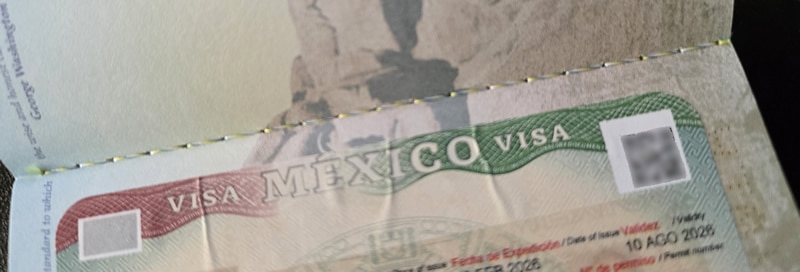
Upon approval at the Mexican Consulate, you will be issued a visa sticker on a page of your passport. This visa is usually valid for six months from the issue date. You must arrive in Mexico before the expiration date.
“Canje” (Exchange) in Mexico:
Upon arriving in Mexico with the visa, you have 30 days to visit an INM office to exchange the visa for a residency card.
Mexico’s Legal Climate for Gender Identity
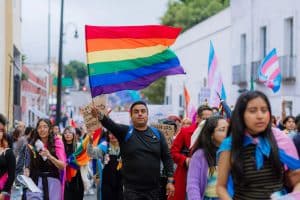 One of the things that initially caught my attention while researching relocation options was Mexico’s legal framework surrounding LGBTQ rights. Mexico has made significant progress in recent years regarding equality legislation. Many states now allow individuals to update gender markers on official documents through administrative processes, and federal anti-discrimination protections explicitly include gender identity.
Mexico’s anti-discrimination law, enforced by the National Council to Prevent Discrimination (CONAPRED), prohibits discrimination based on sexual orientation and gender identity. Same-sex marriage is legal nationwide following rulings from Mexico’s Supreme Court, and gender identity protections are increasingly recognized across multiple states.
While no country is perfect, the overall trajectory in Mexico has been toward broader recognition and protection of LGBTQ people. For transgender individuals weighing their options, that direction matters. This is in part why I chose Ajijic and/or Puerto Vallarta, based on reports of safety among their LGBTQ communities.
LGBTQ Rights in Mexico
I recommend that transgender people, in particular, consider the realities of living in Mexico for transgender people.
Equaldex maintains a listing of LGBT rights in Mexico. I highly recommend a deep dive into the data listed on this site. They provide nationwide as well as state and some local legal breakdowns.
The Transgender Law Center and Cornell University published a 2016 Report on Human Rights Conditions of Transgender Women in Mexico. Although this report is somewhat dated, it is worth reviewing.
Based on my research, I believe equality and safety for the LGBTQ community depends both on location (some areas are not as accepting) and personal behavior. I would strongly advise against participation in any illicit activities such as prostitution or drugs. Likewise, I would advise against placing yourself in dangerous situations such as being intoxicated in public, walking unfamiliar streets at night, etc. Choose a safe, welcoming place and exercise the same safety precautions you would in the U.S. and you should be fine.
My Personal Relocation Priorities
When I began seriously researching relocation, I quickly realized that choosing a place to live involves far more than just legal protections. The choice for everyone is personal. For me, I have spent a fair amount of time in Mexico and have always been treated well. I have visited both Ajijic and Puerto Vallarta so I have a higher degree of familiarity with those locations. Beyond my personal experience, online research was incredibly helpful.
I watched videos, did online research and made notes. My own list of priorities grew into something that looked like this:
• Feeling comfortable and welcome within an existing LGBTQ expat community
• Personal safety and general stability
• Walkability and the ability to live without constant reliance on a car
• Access to quality healthcare
• Proximity to a major international airport
• A location where family and friends can easily visit
• A place where I can still reasonably travel back to the United States if needed
Those factors became my starting point. Everyone’s list will look a little different, but I strongly recommend thinking through these practical considerations before choosing a location.
Helpful Resources for Planning a Move
During my research, I discovered several resources that have been extremely helpful.
One of the most valuable has been the Mexico Relocation Guide. For those who can afford it, I highly recommend purchasing this guide. It’s much more than a simple ebook. It includes a large amount of detailed information, access to an active online community, and connections to vetted services ranging from immigration assistance to healthcare resources. I highly recommend the assistance of an immigration facilitator, as they know the process thoroughly. More on that in a moment…
Perhaps most importantly, the guide covers topics you didn’t even realize you needed to think about. Taxes. Residency permits. Healthcare systems. Insurance. Banking. Real estate. Cultural differences. When relocating internationally, the unknowns can feel overwhelming. Having a structured resource that walks through these details can make the entire process far more manageable.
Immigration Facilitator Services
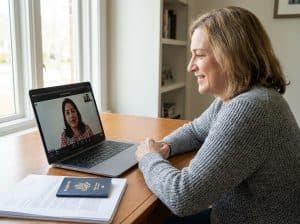 Back to the Immigration Facilitator now. I hired an immigration facilitator who was suggested in the Mexico Relocation Guide. On my own, I had obtained an appointment in my hometown for a meeting with the Mexican Consulate. I was coached on preparing my documentation and how to interact with the staff. Unfortunately, things didn’t go my way and I was denied at that appointment. My facilitator talked me off the ledge so to speak and let me know each office has their own criteria and that I should simply book an appointment at a Mexican Consulate in another city. My facilitator took the lead and booked an appointment in Phoenix. Long story short, I walked out of the Phoenix consulate with a Mexican Residency Visa!
My next step will take place in Mexico at the Instituto Nacional de Migración (INM) office where I will complete the “canje” process of exchanging the visa in my passport for a resident card. This resident card will give me permission to reside in Mexico without needing to leave the country periodically to reset a tourist permit.
You can certainly plan and execute your relocation to Mexico without this guide, however, you will likely find a much smoother process with fewer drawbacks. Left on my own, I probably would have given up before I was successful. In my opinion, The Mexico Relocation Guide was money well invested in my future.
Consulate Resources
The Mexican Government Foreign Affairs website lists a number of resources you will find helpful including:
- Temporary Residency Visa Requirements
- Permanent Residency Visa Requirements
- Residency Visa Application Form
YouTube Resources
Another powerful research tool is YouTube. There are countless expats documenting their experiences living in different regions of Mexico. Watching those videos helped me understand the day-to-day life in places I had never visited before. It’s not the same as being there, of course, but it’s a fantastic way to gain familiarity and begin narrowing down possibilities.
Helpful YouTube Channels
- Mexico Relocation Guide
- Truly Remarkable Life
- Almost Retired in Mexico
- Retired Life Mexico
- Valencia Shanelle
- Alex Wittman
- Gringos R Us
- Spanish With Nate
These are just a few examples. If you go to YouTube and enter your search terms you will find some great channels for information. Unfortunately, there are not many channels that specifically focus on transgender in Mexico, but by watching Mexico-focused channels, you will find helpful information.
Other Online Resources
Another valuable step is finding reliable information online. Search engines can help locate helpful resources. Try search terms such as “LGBTQ expats in Mexico,” “transgender relocation to Mexico,” “living in Ajijic expat community,” or “Puerto Vallarta LGBTQ community.” Insert your own search terms based on your situation and your priorities. These searches may lead to blogs, relocation websites, legal resources, and firsthand stories from people who have already made the move.
Facebook can also be extremely useful, as there are many active expat and LGBTQ-focused groups where members openly local community, visas, rentals, healthcare, language tips, and glimpses of everyday life in different parts of Mexico.
While it’s always a good idea to do your own research to verify information and recognize that individual experiences can vary. Online communities can provide a sense of connection and practical insight while you’re still in the research phase. You may even meet new friends. I sure have! These websites and online communities can become a support network that helps turn your relocation idea into a cohesive plan.
Learning the Language

One of the first realities you encounter when considering relocation to Mexico is the importance of learning Spanish. Yes, there are areas with strong English-speaking expat communities, but making a real life in another country means engaging with the language and culture. It opens doors, builds relationships, and shows respect for the place you’re choosing to call home.
One program I’ve personally been enjoying is Spanish with Nate. It’s taught by a native English speaker who has built a fun and supportive online learning community using the Skool platform. The program focuses on conversational Spanish and practical everyday communication, which is exactly what many of us need when preparing for relocation.
Language learning is a journey, and having a welcoming community makes it far less intimidating.
Narrowing My Search: Ajijic & Puerto Vallarta
After spending many hours researching potential locations, my focus eventually narrowed to two well-known LGBTQ-friendly expat communities in the state of Jalisco, Mexico. There were others but these seemed most ideal based on my personal criteria.
Ajijic
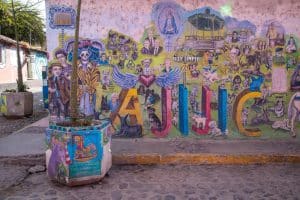 Ajijic is a charming lakeside town located on Lake Chapala, not far from Guadalajara. It has a long history as an expat destination and is known for its relaxed pace of life, strong arts community, and welcoming atmosphere.
The expat population there is large and diverse, including many LGBTQ residents. English is widely spoken, healthcare options are good, and Guadalajara International Airport is about 40 minutes away.
For someone seeking a softer landing while adjusting to life in Mexico, Ajijic has a lot to offer. More info on Ajijic.
Puerto Vallarta
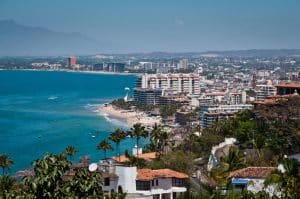 Puerto Vallarta, on the Pacific coast, is one of the most famous LGBTQ destinations in Latin America.
The city’s Zona Romántica neighborhood has a vibrant LGBTQ community, countless restaurants and cafes, beach access, walkable streets, and a strong international presence. English is commonly spoken in many areas, and the city has a major international airport with direct flights to many U.S. cities.
Puerto Vallarta is more energetic and tourism-oriented than Ajijic, but it also offers a strong support network for LGBTQ residents and visitors alike. More info on Puerto Vallarta.
Both of these locations provide something valuable for someone in the LGBTQ community who is relocating from the United States: community.
My Next Steps
At this stage, I have completed what most say is the hardest part — obtaining my residency visa from the Mexican Consulate in the U.S. Now, I move to the next step. I will be traveling to Mexico soon to complete canje and obtain my temporary resident card. Be sure to check back as I will detail my experience here once that step has been completed.
Once I get settled and become more comfortable speaking conversational Spanish, I may eventually decide to move somewhere less dominated by expats and become more deeply immersed in Mexican culture. But for now, finding a soft landing — a place where I can safely and comfortably begin this next chapter — is the priority.
My own journey is still unfolding. I’m learning as I go, asking questions, and taking things one step at a time. If you’re exploring the same path, I hope sharing my experience helps in some small way.
And if you’re already living happily somewhere in Mexico, especially as part of the LGBTQ community, I would love to hear your story too. You may contact me by commenting below and I will reply. The editors at TGGuide might even want to publish your story to help others who may be considering relocation. Together, we will get through the uncertainty of our times.
To be continued…